An MBA in Finance provides strong career prospects across various industries, offering roles focused on financial planning, analysis, investment, and risk management. Here’s a breakdown of some key job roles and specializations in finance for MBA graduates: Graduates can progress to leadership positions like Chief Financial Officer (CFO) or Head of Finance. The field also offers pathways into regulatory and policymaking roles, especially for those focused on risk and compliance. The demand for financial expertise continues to grow as companies rely on data-driven insights for strategic financial planning.1. Investment Banking
2. Corporate Finance
3. Financial Consulting
4. Asset and Wealth Management
5. Risk Management
6. Private Equity and Venture Capital
7. Commercial Banking
8. Financial Planning and Analysis (FP&A)
9. Treasury Management
10. Accounting and Auditing

Register now for MBA/PGDM Admission Notification
MBA Speclazations:- Scope, Career, Colleges, Admission...
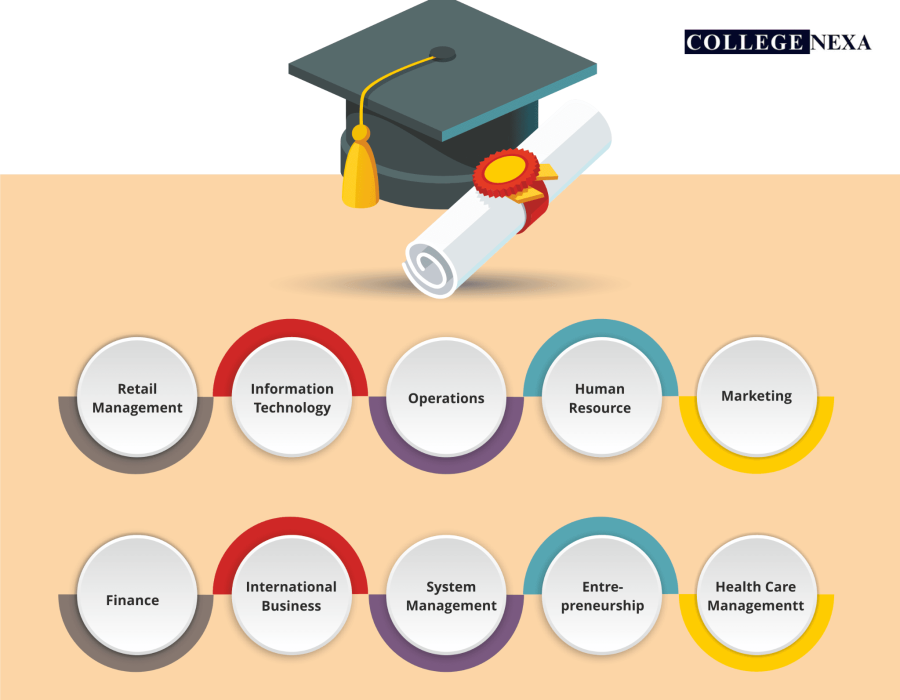
MBA programs offer various MBA specializations or concentrations that allow students to focus on specific areas of business and management according to their career goals and interests. The choice of specialization can have a significant impact on your career trajectory. Here are some common MBA specializations. Choosing an MBA Specialization can be as difficult and confusing as choosing a career for yourself or deciding where you want to pursue your MBA degree.
Choosing the right specialization depends on your career goals, interests, and the industry you wish to enter after completing your MBA. In India, MBA programs offer various specializations, catering to diverse career interests and industries. Here’s a list of some of the most common MBA specializations available in India:
MBA in Marketing
An MBA in Marketing opens doors to diverse, high-impact roles across many industries. The scope is broad and includes roles in traditional marketing and modern digital fields. Here’s a breakdown of common job titles and focus areas for MBA marketing graduates: 1. Brand Management
Role: Oversee brand identity, create brand strategies, ensure brand consistency, and manage the product lifecycle.
Jobs: Brand Manager, Assistant Brand Manager, Product Manager.
Industries: Consumer goods, pharmaceuticals, fashion, tech, FMCG.
2. Digital Marketing
Role: Focus on digital channels like social media, email, and search engines to build brand awareness and engagement.
Jobs: Digital Marketing Manager, SEO Specialist, Social Media Manager, Content Strategist.
Industries: E-commerce, tech, entertainment, and any company with a digital presence.
3. Market Research and Analytics
Role: Conduct market research, analyze data to understand consumer behavior, and guide business decisions.
Jobs: Market Research Analyst, Marketing Analyst, Consumer Insights Specialist.
Industries: Consulting, market research firms, FMCG, financial services.
4. Product Marketing
Role: Position products in the market, lead go-to-market strategies, and align product features with customer needs.
Jobs: Product Marketing Manager, Launch Manager.
Industries: Tech, software, automotive, and B2B sectors.
5. Sales Management
Role: Focus on building sales strategies, managing sales teams, and driving revenue growth.
Jobs: Sales Manager, Regional Sales Head, Business Development Manager.
Industries: Pharmaceuticals, FMCG, real estate, financial services.
6. Advertising and Public Relations (PR)
Role: Handle brand communications, media relations, and public image.
Jobs: PR Manager, Media Planner, Advertising Manager.
Industries: Media houses, advertising agencies, entertainment, and hospitality.
7. Consulting
Role: Work with clients to solve marketing-related problems, develop growth strategies, and optimize marketing performance.
Jobs: Marketing Consultant, Strategy Consultant.
Industries: Consulting firms, freelance consulting.
Marketing MBA graduates can also move into leadership roles, such as Chief Marketing Officer (CMO) or Head of Growth, especially as they gain experience. The sector continues to expand with technological advancements, particularly AI and data analytics, making an MBA in Marketing a dynamic and in-demand choice.
MBA in Finance
An MBA in Finance provides strong career prospects across various industries, offering roles focused on financial planning, analysis, investment, and risk management. Here’s a breakdown of some key job roles and specializations in finance for MBA graduates:
MBA in Human Resource Management
An MBA in Human Resource Management (HR) opens up a wide range of roles centered on recruitment, training, development, employee relations, and organizational strategy. With an emphasis on people and organizational success, here’s a look at some of the most common job roles and focus areas for MBA HR graduates HR graduates with experience can move up to strategic leadership positions like Chief Human Resources Officer (CHRO) or Director of Human Resources. With businesses increasingly focused on employee well-being, diversity, and digital HR tools, HR professionals are essential in fostering sustainable, employee-centric organizations.1. Talent Acquisition and Recruitment
2. Training and Development
3. Employee Relations and Engagement
4. Compensation and Benefits
5. HR Analytics and Workforce Planning
6. Organizational Development and Change Management
7. Performance Management
8. Compliance and Labor Relations
9. Diversity and Inclusion (D&I)
10. HR Consulting
MBA in Operation Management
An MBA in Operations Management prepares graduates to oversee and optimize the processes involved in producing goods and services, covering areas like supply chain, logistics, quality control, and process improvement. Here’s a breakdown of the main roles and responsibilities in operations management: Experienced operations professionals often advance to senior roles such as Chief Operations Officer (COO), Head of Supply Chain, or Director of Operations. In today’s business environment, the demand for efficient, tech-driven operational strategies makes this specialization critical, particularly in industries adopting automation, AI, and sustainable practices.1. Supply Chain Management
2. Logistics and Distribution
3. Production Planning and Control
4. Quality Assurance and Quality Control
5. Project Management
6. Process Improvement and Lean Management
7. Inventory Management
8. Operations Analysis and Data Analytics
9. Environmental and Sustainability Management
10. Customer Service Operations
MBA in Business Analytics
An MBA in Business Analytics combines data science, business intelligence, and strategic decision-making, preparing graduates for roles that involve analyzing data to guide business strategy. With the increasing demand for data-driven decision-making, the scope for MBA graduates in this field is expanding across multiple industries. Here’s a breakdown of some major job roles and focus areas: Professionals with an MBA in Business Analytics can advance to senior roles like Chief Data Officer (CDO), Director of Analytics, or Head of Strategy, especially as organizations increasingly value data-driven insights for strategic growth. The scope for business analytics continues to grow as companies across industries focus on leveraging big data, AI, and machine learning to gain competitive advantages.1. Data Analytics and Business Intelligence
2. Data Science and Machine Learning
3. Financial Analytics
4. Marketing Analytics
5. Operations and Supply Chain Analytics
6. Product and Strategy Analytics
7. Human Resource (HR) Analytics
8. Risk and Compliance Analytics
9. Customer and Retail Analytics
10. Healthcare Analytics
MBA in Rural Management
An MBA in Rural Management focuses on developing sustainable solutions and improving the socio-economic conditions in rural areas. This program prepares graduates to work in sectors like rural development, agriculture, microfinance, and social entrepreneurship. The demand for professionals skilled in managing rural development projects and resources is high, especially as governments, NGOs, and private companies focus on sustainable growth in these regions. Here’s a breakdown of key roles and job opportunities in rural management MBA graduates in Rural Management often find senior roles like Program Director, Head of Rural Operations, or CSR Head as they gain experience. The field is growing as more organizations focus on rural sustainability, financial inclusion, and improving living standards in underserved regions. The emphasis on rural development is strong in countries with large rural populations, making this MBA highly relevant in emerging markets.1. Rural Development Officer
2. Agribusiness Management
3. Microfinance and Rural Banking
4. Corporate Social Responsibility (CSR)
5. Social Entrepreneurship
6. Non-Governmental Organizations (NGOs)
7. Rural Marketing and Sales
8. Livelihood Promotion and Skills Development
9. Rural Supply Chain Management
10. Sustainable Development and Environmental Management
MBA in International Business
An MBA in International Business prepares graduates to navigate and manage businesses on a global scale, with a focus on international markets, cross-cultural management, and global trade regulations. As companies increasingly operate in multiple countries, the demand for professionals who understand international markets and can manage cross-border operations has grown significantly. Here are some key roles and job opportunities for MBA graduates in International Business: Experienced professionals in International Business can advance to leadership roles like Chief International Officer, Global Operations Director, or Head of International Expansion. With the globalization of markets and the increasing need for businesses to reach international audiences, this MBA specialization provides extensive career opportunities and is particularly valuable in multinational organizations.1. International Marketing Manager
2. Global Business Development Manager
3. Export and Import Management
4. International Finance Manager
5. Global Supply Chain and Logistics Management
6. International Trade Compliance
7. Cross-Cultural Management and HR
8. Global Product Manager
9. International Strategy Consultant
10. Risk Management and Compliance
11. International Project Management
12. Foreign Affairs and Diplomatic Roles
MBA in Information Technology Management
An MBA in Information Technology (IT) Management bridges the gap between business strategy and technology, preparing graduates to manage IT systems, digital transformations, and technology-driven projects. As technology increasingly becomes a core part of business operations, professionals with both IT and business acumen are in high demand. Here’s a look at the scope and job roles available for MBA graduates in IT Management: Experienced professionals in healthcare management often advance to senior positions like Chief Operating Officer (COO), Chief Administrative Officer, or Head of Operations. The demand for skilled healthcare managers is expected to continue growing, particularly as healthcare systems worldwide focus on improving efficiency, enhancing patient experience, and adapting to new regulations and technologies.1. Hospital Administrator
2. Healthcare Consultant
3. Pharmaceutical Project Manager
4. Health Informatics Manager
5. Healthcare Operations Manager
6. Medical Practice Manager
7. Health Insurance Manager
8. Healthcare Marketing Manager
9. Public Health Administrator
10. Medical and Health Services Manager
11. Healthcare Financial Manager
12. Healthcare Policy Analyst
13. Clinical Operations Manager
14. Healthcare Supply Chain Manager
MBA in Retail Management
An MBA in Retail Management prepares graduates to manage various aspects of retail businesses, including operations, merchandising, sales, marketing, and supply chain management. As retail has evolved with the rise of e-commerce and omnichannel experiences, there is a strong demand for skilled professionals who can adapt to changing consumer behaviors and integrate digital and physical retail channels. Here’s a look at the scope and job opportunities for MBA graduates in Retail Management With the shift toward digitalization, those with an MBA in Retail Management often find themselves involved in roles that blend traditional retail skills with technology, customer data analytics, and digital marketing. Experienced professionals may advance to senior roles like Chief Retail Officer, Head of Sales, or Director of Operations. The retail sector offers a broad scope of opportunities, especially for those skilled in managing the balance between in-store and online retail channels. .1. Store Manager
2. Category Manager
3. Merchandising Manager
4. Retail Operations Manager
5. E-commerce Manager
6. Supply Chain and Logistics Manager
7. Product Development Manager
8. Retail Marketing Manager
9. Sales Manager (Retail)
10. Retail Analytics Manager
11. Customer Relationship Manager
12. Omnichannel Retail Manager
13. Retail Real Estate Manager
14. Retail HR Manager
15. Franchise Manager
MBA in Agribusiness Management
An MBA in Agribusiness Management focuses on the intersection of business practices and the agricultural sector, preparing graduates to tackle the unique challenges and opportunities in agribusiness. This program covers various aspects of agriculture, including production, supply chain management, marketing, and policy, equipping students with the skills needed to succeed in the dynamic agribusiness landscape. Here’s an overview of the scope and job opportunities available for graduates with an MBA in Agribusiness Management Growing Global Demand: As the global population continues to rise, there is an increasing demand for food, creating opportunities in agricultural production, distribution, and marketing. Technological Advancements: The adoption of technology in agriculture (precision farming, biotechnology, data analytics) is transforming the sector, leading to new business models and career opportunities. Sustainability Focus: There is a growing emphasis on sustainable agricultural practices, organic farming, and environmentally friendly operations, creating demand for professionals who can navigate these trends. Policy and Regulation: Understanding agricultural policies, trade regulations, and environmental laws is crucial, providing opportunities for roles in policy advocacy and compliance. Agribusiness Manager Supply Chain Manager Agricultural Marketing Manager Farm Manager Agricultural Policy Analyst Financial Analyst (Agribusiness) Consultant (Agribusiness) Research Scientist (Agriculture) Quality Assurance Manager Agri-tech Specialist Export/Import Manager Sustainability Manager With experience, graduates can advance to senior leadership roles such as Chief Operating Officer (COO) in agribusiness companies, Directors of Agribusiness Strategy, or positions in government and international organizations focusing on food security and agricultural development. Overall, an MBA in Agribusiness Management offers a diverse range of career opportunities, particularly as the industry evolves with technological advancements and increased emphasis on sustainable practices. Graduates will find themselves equipped to tackle the challenges and opportunities presented by the agribusiness sector. .Scope of Agribusiness Management
Job Opportunities
Career Advancement
MBA in Energy and Environment
An MBA in Energy and Environment focuses on the intersection of business principles, energy management, and environmental sustainability. This program prepares graduates to navigate the complexities of energy markets, environmental policies, and sustainable practices while addressing global challenges such as climate change and resource scarcity. The scope of this specialization is broad and growing, driven by the transition toward renewable energy sources and the increasing importance of sustainable practices in various industries. Here’s an overview of the scope and job opportunities for graduates with an MBA in Energy and Environment: Growing Demand for Sustainability: As businesses and governments increasingly prioritize sustainability, there is a strong demand for professionals who can develop and implement environmentally friendly practices. Regulatory Compliance: Understanding and navigating environmental regulations and policies is crucial for companies in various sectors, creating a need for experts in compliance and sustainability. Renewable Energy Transition: The global shift toward renewable energy sources such as solar, wind, and bioenergy presents numerous opportunities for management professionals in these sectors. Corporate Social Responsibility (CSR): Many organizations are integrating CSR into their business strategies, focusing on reducing their environmental impact and enhancing their social responsibility. Technological Advancements: Innovations in energy technology and environmental management systems are driving new business models, requiring professionals who can manage and lead these changes. Energy Manager Environmental Manager Renewable Energy Consultant Sustainability Analyst Energy Policy Analyst Project Manager (Renewable Energy) Corporate Sustainability Officer Environmental Consultant Carbon Management Specialist Energy Trading Analyst Environmental Educator Waste Management Manager With experience, graduates can advance to senior leadership roles such as Director of Energy Management, Chief Sustainability Officer, or Head of Environmental Affairs. The energy and environment sector offers diverse career paths, particularly as organizations increasingly seek professionals who can drive sustainable practices and navigate the complexities of energy management and environmental compliance. Overall, an MBA in Energy and Environment equips graduates with the necessary skills to contribute to the transition towards a more sustainable future, making it a relevant and impactful field in today’s job market..Scope of Energy and Environment Management
Job Opportunities
Career Advancement
©2024 choice education All Rights Reserved.
